
The Path to Preservation

Updated: Jun 11
Today, Minidoka is entering an important phase of historic preservation. Thanks to funding from the Legacy Restoration Fund and years of preparation, rehabilitation of three historic structures – the root cellar, barrack, and mess hall – is underway at Minidoka National Historic Site. These structures are among the few remaining physical reminders of the unjust incarceration of more than 13,000 Japanese Americans at Minidoka during World War II. Ensuring the survival of these structures requires far more than repairing aging wood or stabilizing foundations — it demands a careful process guided by preservation standards, historical research, and a commitment to protecting the site's authenticity.
In 2024, former Friends of Minidoka staff member Camille Daw participated in the National Park Service's Brick, Earth, Stone, Timber (B.E.S.T.) Preservation Workshop Series sponsored by the Historic Preservation Training Center. Through hands-on exercises and behind-the-scenes training, participants explored the principles that guide historic preservation across the National Park System. Her experience highlights the planning and research that occurs before the visible work happens. This guides the careful stewardship of important cultural resources at Minidoka.
Brick. Earth. Stone. Timber- BEST: a Preservation Workshop
By Camille Daw, former Program Manager at Friends of Minidoka
Written in May 2024
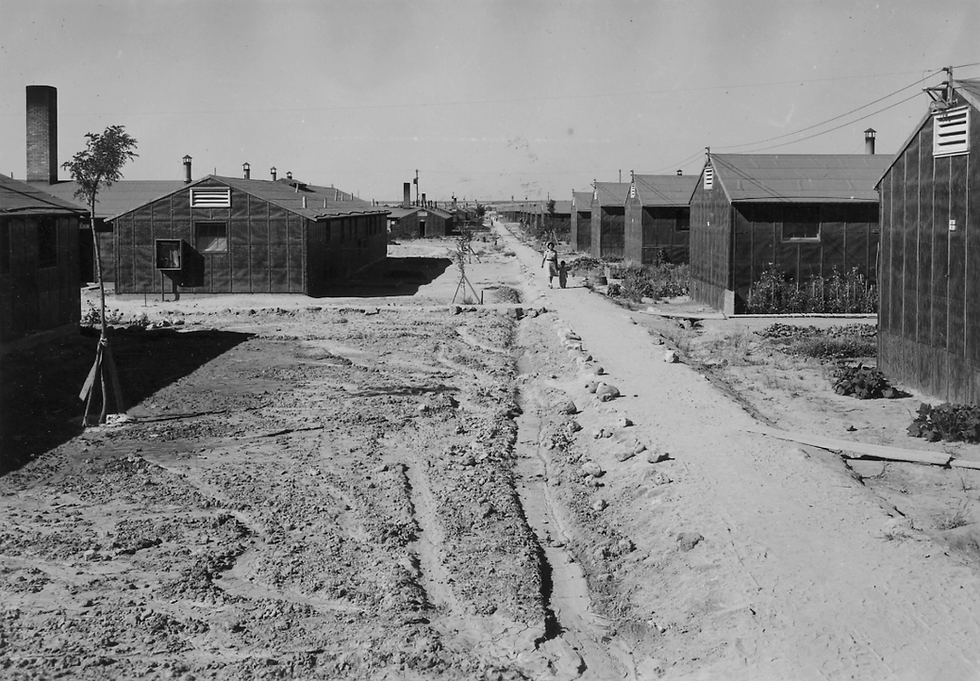
While in operation, the Minidoka concentration camp included over 640 buildings. Only seven structures remain at Minidoka National Historic Site, each with a lifetime of past uses, now used for interpretation and education. Each building served a different purpose and now holds remarkable stories about love, loss, grief, hope, and joy within its walls. Today, the National Park Service is tasked with preserving and protecting the remaining buildings and stories.
Preserving the buildings, however, is no easy task. “Barracks built in an hour” that were then moved off site during the homesteading era to serve as housing for migrant workers only give a glimpse of what Japanese Americans experienced during World War II. When the Block 22 structures were relocated to Minidoka NHS in 2011, it was only the beginning of NPS’s work to preserve these buildings that were designed to be temporary.
Friends of Minidoka staff and interns joined NPS staff from May 14-16, 2024 at Minidoka National Historic Site to learn more about the government’s process of preserving our nation’s historic places. The course, titled; “Guiding Principles for Historic Preservation,” as part of the Brick Earth Stone Timber (BEST) Preservation Workshop Series explored approaches to historic preservation through hands-on learning in the historic structures at Minidoka National Historic Site.
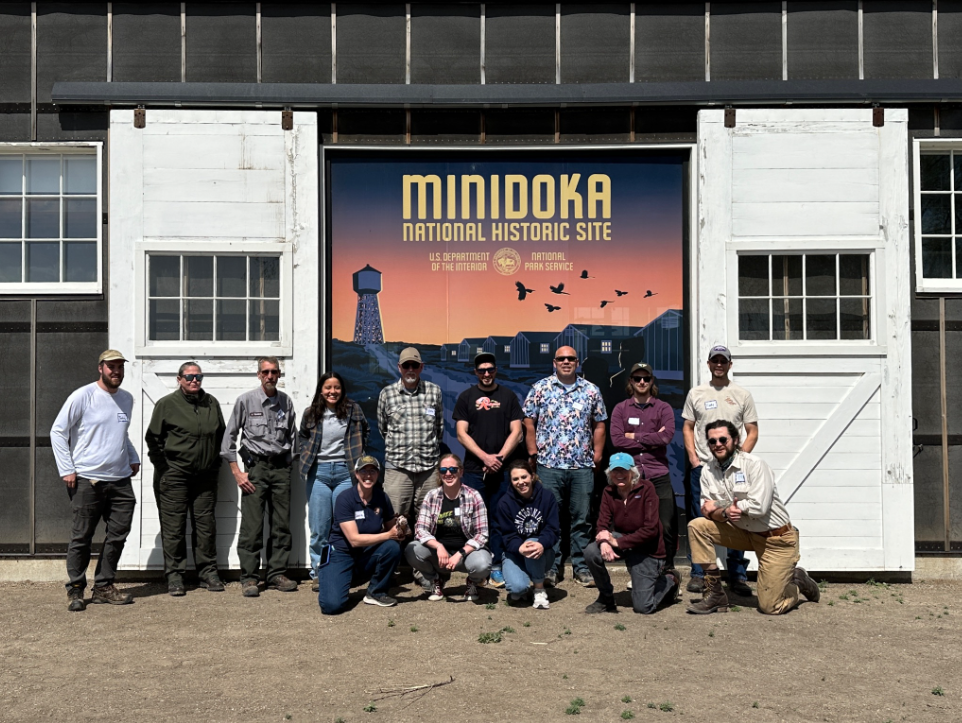
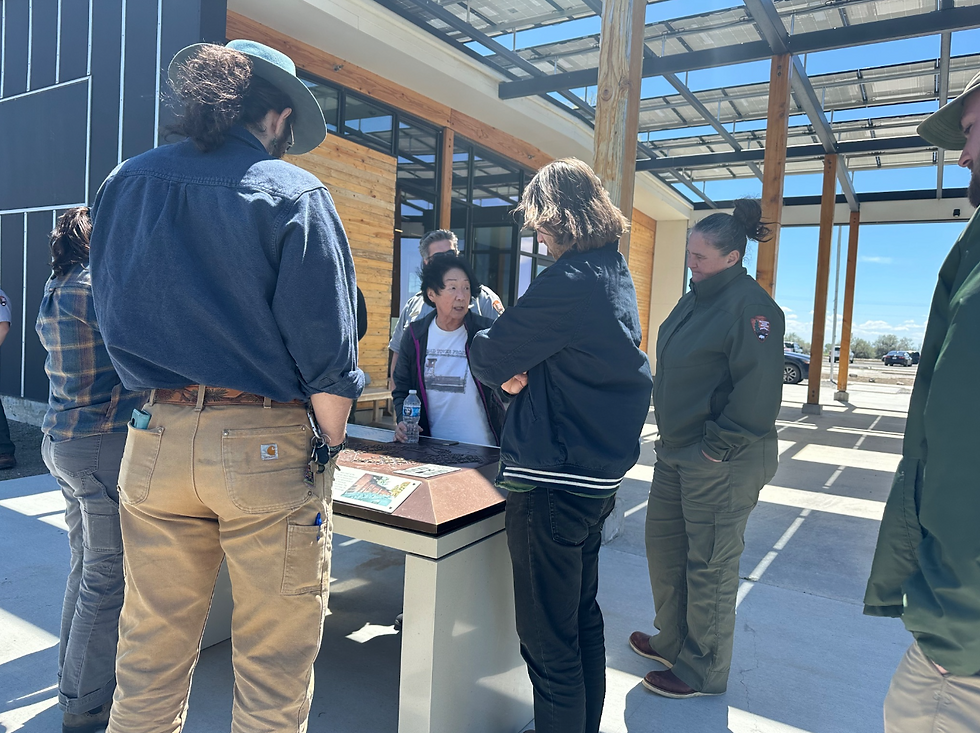
Led by NPS Historic Preservation Training Center staff Lisa Sasser, Katherine Wonson, and Laura Tomcek, the workshop described the process that NPS must follow when managing historic buildings and properties. On the third day of the workshop, participants broke into different groups to perform assessments on three different historic structures at Minidoka NHS to demonstrate their understanding. These buildings took on another meaning at the workshop’s end when participants learned from Park Rangers about how each structure played a role in the lives of Japanese Americans incarcerated at Minidoka during World War II.

Before preserving a building, federal agencies determine whether the structure is worthy of preservation. Surprisingly, not all old buildings are worth preserving. The property, structure, or building must fit within a series of guidelines that determines what “historic” means. Additionally, two categories exist to qualify a building based on unique architecture and vibrant styles. NPS needs to determine the building’s integrity by understanding what “historic” parts of the building are still intact. These two things determine whether a building is worth preserving.

Before touching the barrack, mess hall, or root cellar, NPS employees research the buildings to get a better understanding of what the structure used to look like. Thanks to diagrams, maps, drawings, and photographs, we know that the aspects that made the mess hall look so distinct, or are its character defining features, include the tarpaper outside, the six-paned windows, its confined ceiling, and three chimney smokestacks where the stoves and ovens created a blazing heat for kitchen employees.

Even in the May afternoon it was getting hot for the team of four inside. The chimneys, potbelly stoves, and ceiling were removed from the building a long time ago, ultimately changing how the building felt. The team made additional assessments to the building, indicating where the building needed treatment, or changes, to preserve its integrity.
From the outside, I noticed issues with the building, including two dormers which were added onto the building while at the Jerome County Fairgrounds. Inside revealed a steel beam and placed where the building was clearly cut into multiple pieces. The attempts to put it back together started to show signs of age at risk to the building. We found many areas where the mess hall required stabilization to prevent collapse, but many aspects of the building’s past remained intact.

Based on these assessments our team created an actionable potential plan for the building’s future based on the Secretary of Interior’s Standards for the Treatment of Historic Properties. These standards, or preservation methods, lay out four different approaches that a preservationist can choose from when treating historic buildings. While some people may use the different terms interchangeably, each has a different set of guidelines as to what can– and more importantly– what cannot be done to a structure.

Each standard opts to do as little irreversible harm to a building as possible and aims to use existing materials when possible. When original wood, metal, or concrete cannot be located, suitable replacements help to retain the historic feeling of a building. Historic documents and research provide clues as to what materials were used.
Secretary of Interior’s Standards for the Treatment of Historic Properties Choosing the most appropriate preservation treatment standard for a property requires careful decision making about a building's level of significance, as well as considering other factors, including its physical condition, its proposed use, code regulations, etc. | |
Treatment Type | Definition |
Preservation | The act of maintaining and sustaining the structure "as is." The goal is not to add new additions or upgrades, but to maintain and repair the existing historic materials. |
Rehabilitation | The process of creating a new or compatible use of historic property while preserving its historic features. Rehabilitation is the only treatment standard that allows for alterations and the construction of new additions if necessary for a continuing or new use of the historic building. |
Restoration | The act or process of accurately depicting the form, features, and character of a property as it appeared at a specific period of time. This often includes the removal of features from other periods in its history or reconstructing missing features from the restoration period. |
Reconstruction | Recreating a non-surviving structure by means of a new construction. The structure is reconstructed to a specific period of time and should only be considered when there is accurate information to base reconstruction off. |
The diagonal wood beams in the barrack are an example of preservation because they stabilize the building, preventing further collapse. Preservation also includes small or minor treatments, often on windows or entrances. This treatment of historic buildings “holds a property in time.”

The Visitor Center, originally the automotive repair shop, is an example of rehabilitation to a building. This means to “move a property forward in time,” allowing for a new use of the building through alterations and additions that might be necessary for that use. Alterations included sprinkler systems that keep the building up to fire code and restroom facilities. Rehabilitation often allows buildings to take on second lives after their initial use.
Often, people confuse rehabilitation with restoration, which means to “return a property to an earlier time,” often the time when it was historically significant. NPS sometimes chooses to restore a building for interpretive or educational purposes. Often focusing on appearances, this helps visitors understand what the experience was like.
Even more rare, is reconstructing structures or buildings, which means to “re-establish a property in time.” In some cases, part, or all of a building no longer exists, which makes a key difference in the structure’s appearance, so rebuilding becomes necessary. The guard tower and the honor roll at the entrance of Minidoka NHS, are examples of reconstruction because they were removed after the war, but were reconstructed after Minidoka became an NPS unit.

In most cases, fulfilling the needs of an operational park requires multiple assessments to indicate which parts of the building require which treatment standards; preservation, rehabilitation, restoration, or reconstruction. After selecting a standard to follow, NPS creates a plan, following specific instructions, or guidelines from the Secretary of Interior as to what cannot and can be done. These prevent our NPS from incidentally making any choices that don’t fit under the standard of treatment. Once the plan of action is complete, everything has to be submitted to a Section 106 coordinator that fills out an approval application.
Only then does the work begin. Sometimes the process takes months, but more often than not, treating historic buildings, or preserving them, takes years. Following the process focuses on retaining as much of the building as possible, which was not the case when Minidoka closed in 1945. Unlike many historic sites, Minidoka’s buildings were not designed for preservation or durability. Yet, preservationists today focus on research and planning to guarantee that these be preserved to tell an important story of our nation’s past. The stories of survivors also play an integral role in understanding what the felt human experience of each structure holds and should continue to impart on those who visit the site.


Comments